

How to Prepare for an ISO 17025 Assessment (Without the Panic)

Preparing for an ISO 17025 assessment requires more than documentation. It requires clear evidence of competence, control, and consistency.
For many labs, the lead-up to an ISO/IEC 17025 assessment is marked by urgency. Documents are reviewed, registers are updated, training records are chased, and everyone braces for scrutiny. You might even have a lab clean-up!
Preparation often becomes reactive. Sometimes the lab resembles a place of headless chooks: feathers aflutter, with lots of running without direction.
But effective assessment preparation is not about rushing to tidy paperwork. It is about ensuring your lab can confidently demonstrate competence, control, and consistency. Our 10 steps to cultivating a practical, structured approach to preparing for an ISO 17025 assessment, without unnecessary stress, are revealed below.
1. Understand What Is Actually Being Assessed
An ISO/IEC 17025 assessment is not a document audit. It is an evaluation of whether your laboratory:
- Produces technically valid results
- Demonstrates competence
- Operates under controlled conditions
- Understands and manages risks
- Learns from issues and improves
Assessors are looking for evidence that your systems support reliable outcomes. They are not looking for perfectly formatted procedures.
When preparation focuses on “looking compliant” rather than “being controlled,” gaps usually appear under questioning. So start by reframing the purpose of the assessment. It is about confidence in valid and reliable results, not pretty paperwork.
2. Review Your Scope and Technical Activities
Before focusing on management system clauses, ensure your technical foundation is solid.
Ask the following questions (or delegate it to other colleagues who can help):
- Are methods current, validated, and fit for purpose?
- Is measurement uncertainty appropriately determined, with the latest uncertainty inputs, and applied?
- Are staff authorised for various activities under the scope of accreditation and is there evidence of their competence in those activities?
- Is equipment maintained, calibrated, and traceable?
- Are quality control activities effective and reviewed?
Technical weaknesses are far more significant than administrative inconsistencies. A well-controlled technical process with minor document formatting issues is rarely a major problem. The reverse is not true.
3. Test Your System — Don’t Just Read It
Many labs prepare for an assessment by re-reading procedures. A better approach is to test how the system actually works.
Select a recent job and trace it through the entire workflow. In assessor parlance, it’s called a “paper chase” and that means sometimes looking high and low for the pieces of evidence (“paper”) that each step in the job has been done.
This task should involve at least the steps in the workflow.
- Contract review
- Method selection
- Sample handling
- Testing or calibration
- Quality control
- Result reporting
- Record retention
If you can follow the evidence clearly and consistently, your system is likely functioning well. If you struggle to connect steps or find missing records, those are areas to address before the assessment.
For those who really want to go the extra mile, you could even write this exercise up as an ad-hoc internal audit.
4. Review Corrective Actions Properly
Repeated nonconformances are one of the most common assessment frustrations. And if you think about it, these are often one of the common headaches of anyone working in the lab.

Before your assessment, at least review:
- Previous external assessment findings
- Recent internal audit findings
- Customer complaints
- Quality control failures
Ask whether corrective actions addressed root causes or simply closed the issue administratively. And if you’re stuck on how to do a more robust root cause analysis, read our previous article.
Assessors will often test whether the same issue could recur. Demonstrating thoughtful, systemic corrective action builds confidence.
5. Simplify Your Risk Review
Risk-based thinking under ISO/IEC 17025 is frequently overcomplicated, especially by NATA lead assessors with preconceived ideas of looking for risk registers, or risk assessments against extensive matrices.
You do not need extensive matrices or complex scoring systems unless you determine they genuinely add value.
Instead, ensure you can demonstrate:
- Awareness of risks to impartiality
- Control of risks affecting validity of results
- Consideration of changes and their impacts
- Ongoing monitoring of emerging issues
And remember that many things we do in labs, such as quality control, training programs and method validation and verification activities are risk mitigation strategies!
If your laboratory understands its risks and responds proportionately, you are meeting the intent of the standard.
6. Prepare Your People, Not Just Your Paperwork
An ISO/IEC 17025 assessment involves conversations.
Staff should understand:
- What they are authorised to do
- Where relevant procedures are located
- How they ensure the validity of results
- What to do if something goes wrong
Fun fact: In my very first NATA assessment while working in a lab, I received little by way of communication from our supervisors on what to expect at the assessment. My friend and I discussed this and thankfully decided that if we didn’t know the answer, the best thing was not to make it up as we go, and instead just explain we didn’t know and that we would ask our supervisor. We figured as young 18-year-old trainees, our job was not to know everything. Oh, to be young and wise again! 😊
Tell your staff that they do not need to memorise clauses. They do need to understand their work and how it fits within the system. Confident, knowledgeable staff are one of the strongest indicators of a mature laboratory.
7. Conduct a Calm Internal Review
A pre-assessment internal review can be extremely valuable, but it should be constructive, not adversarial.
Just like any audit, the focus should be on:
- Clarity of evidence
- Consistency of records
- Alignment between practice and procedure
- Technical justification where required
Avoid creating unnecessary last-minute work. Fix what matters. Document what is reasonable. Accept that perfection is not the objective; control is.
8. Avoid Last-Minute Over-Engineering
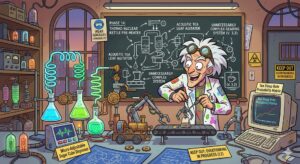 One of the most common mistakes we see labs make before an assessment is introducing major system changes too close to the visit. Sometimes it happens because of the previous assessment and the “helpful suggestions” from the NATA assessors.
New procedures, rewritten forms, or redesigned registers may look impressive but can create confusion if staff are unfamiliar with them. In contrast, stable, understood systems are stronger than newly polished ones.
If something genuinely needs correction, address it. Otherwise, ensure the system is clear, controlled, and defensible, and that your people know how it operates.
9. During the Assessment: Engage Professionally
During the assessment:
- Answer questions directly and factually
- Provide evidence rather than opinions
- Acknowledge things you don’t know honestly
- Take notes on feedback
If a potential issue is raised, listen carefully before responding. Clarifying context is appropriate, and you can ask questions if you are not sure about which requirement the issue relates to.
Assessments are professional evaluations. Treat them as such.
10. Remember the Bigger Picture
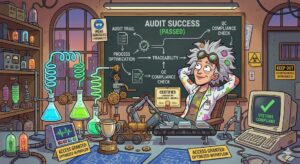 A successful ISO/IEC 17025 assessment is not one with zero findings (although it is possible to have this outcome).
A successful assessment is one where:
- Systems are understood
- Risks are controlled
- Technical competence is evident
- Issues are managed thoughtfully
Findings, when they occur, are opportunities to strengthen the system. Laboratories that approach assessments calmly and constructively tend to build long-term resilience.
The bottom line
Preparing for an ISO/IEC 17025 assessment does not require panic. It requires clarity.
You should have a laser focus on the 3 C’s of:
- competence
- control
- consistency
If your lab can demonstrate those three things, you are preparing in the right way.
FAQs
What do ISO 17025 assessors look for?
Assessors look for evidence of technical competence, valid results, controlled processes, and effective corrective action.
How do you prepare for an ISO 17025 audit?
Preparation involves reviewing technical activities, ensuring records are complete, confirming staff competence, and testing how the system works in practice.
Is undergoing an ISO 17025 assessment difficult?
It can be challenging if systems are unclear or inconsistent, but well-controlled laboratories typically find assessments manageable.
If you would like an objective review of your readiness before an upcoming assessment, MAS Management Systems can help you work through preparation in a practical and structured way.
Call or email MAS Management Systems today and find out how we can help you transform your next NATA assessment from stress-fest to success story.
Email info@masmanagementsystems.com.au or phone Maree on 0411 540 709.
Remember, you don’t have to do this alone!
Catch up on our Accreditation Readiness series:
Part 1: ISO/IEC 17025 Accreditation: What Laboratories Actually Need to Know
Part 2: Working with NATA Assessors: What Laboratories Should Know